iPhone · Android · Apple Watch

Your baby's rhythm, learned from your baby.

Wake windows read from your own baby's sleep, not from an age table, so the app says when the next sleep window opens. Feeds, naps, diapers, growth and milestones in one tap, on the same timeline as the other parent.


Free during early access. No ads, no in-app purchases, no trackers.

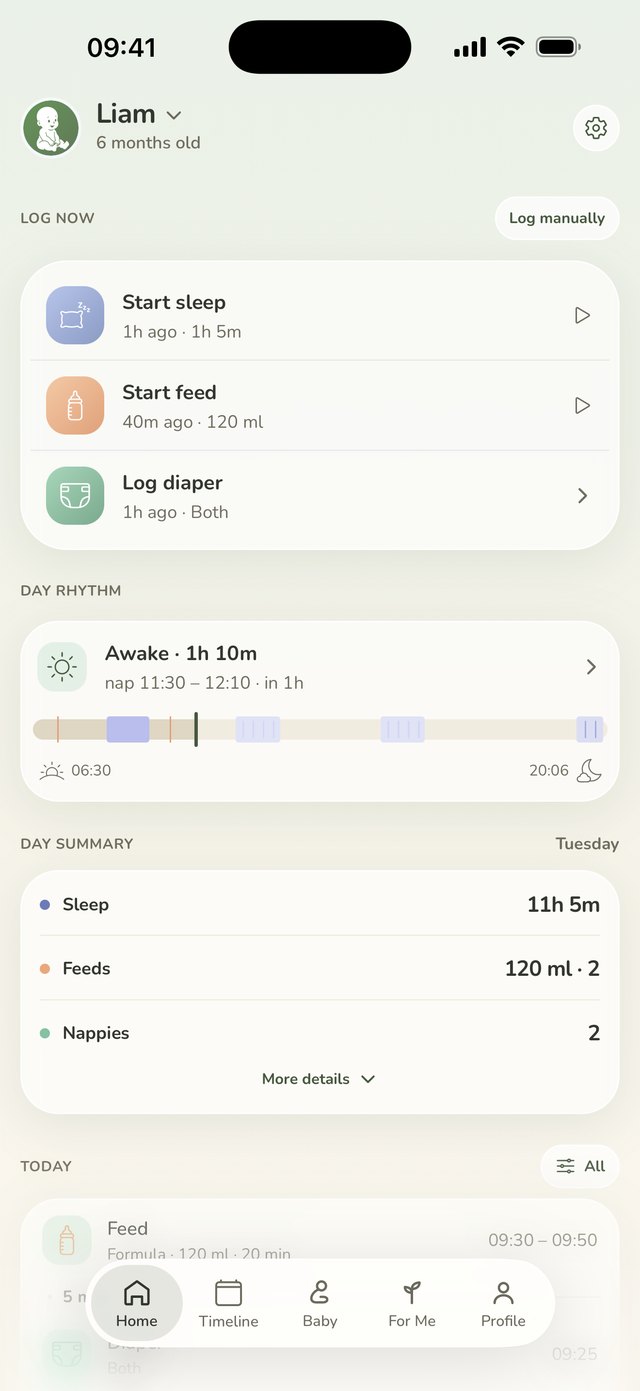
The Baby Atlas home screen: one-tap sleep, feed and diaper logging, the day rhythm strip, and today's timeline below.

Why it exists

Every new parent asks the same three questions.

Is today going OK?

One tap logs a feed, a nap or a diaper. The home screen answers "when was the last one?" before you've finished asking.

Are they growing the way they should?

Weight and height land on the official WHO curve, with the percentile written out as a sentence and the milestones that belong to the month you're in.

And how am I holding up?

A daily check-in that's only about you: energy, mood, body, your own sleep, plus two minutes of guided breathing.

Track

One tap, and it's logged.

Start a nap and the timer runs everywhere: on the lock screen, in the home-screen widget, on your wrist. Forgot the 4am feed? Add it after the fact in a few seconds, or resume the last one if it turned out not to be over.
  • Breast or bottle, timed live or added later
  • Which breast, in the order you used them, so the app can answer which side is next
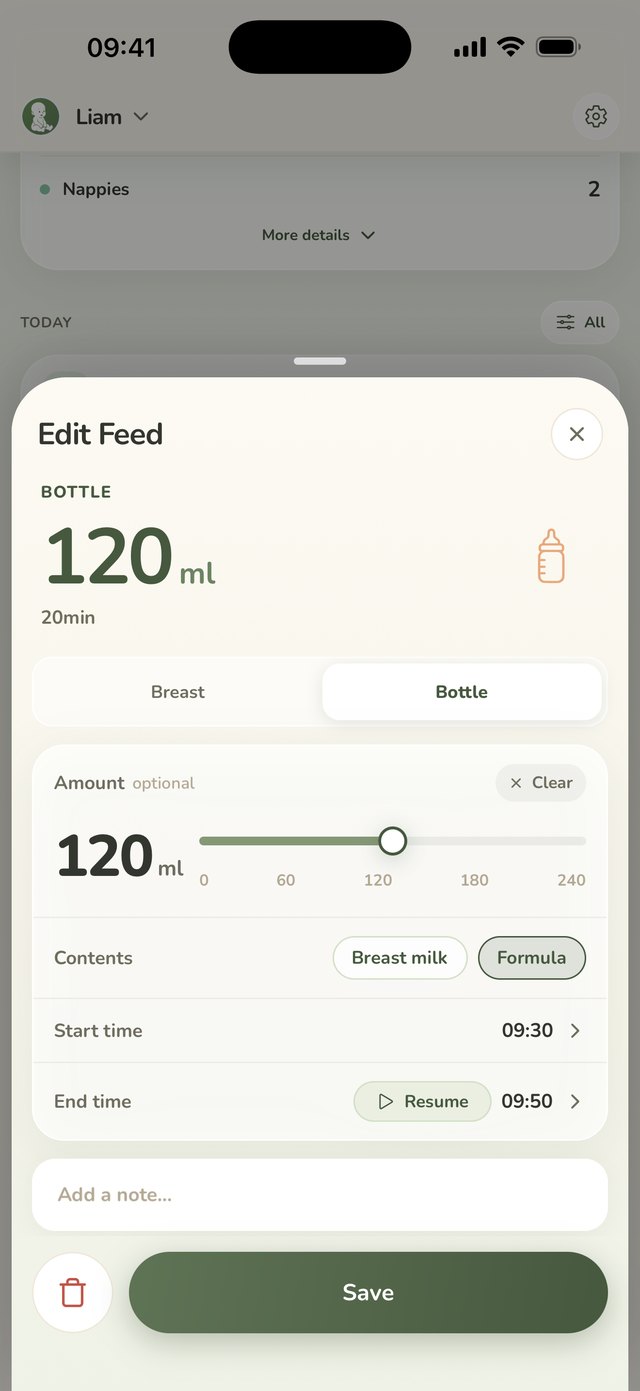
  • Bottle amounts on a slider that lands on round numbers, breast milk or formula
  • Nap or night is worked out from when the sleep happened, so there is nothing to pick
  • A wake-up reminder while they're down
  • On sick days, temperature with how it was taken, and medicine with name, dose and time. Both start switched off
The feed sheet: 120 ml as the heading, an amount slider under it, and breast milk or formula below.

Day rhythm

See the shape of the day.

Today's naps and feeds on one timeline, with how long they've been awake right now, and an estimate of the next nap and bedtime, learned from your baby's own last two weeks rather than a generic schedule.
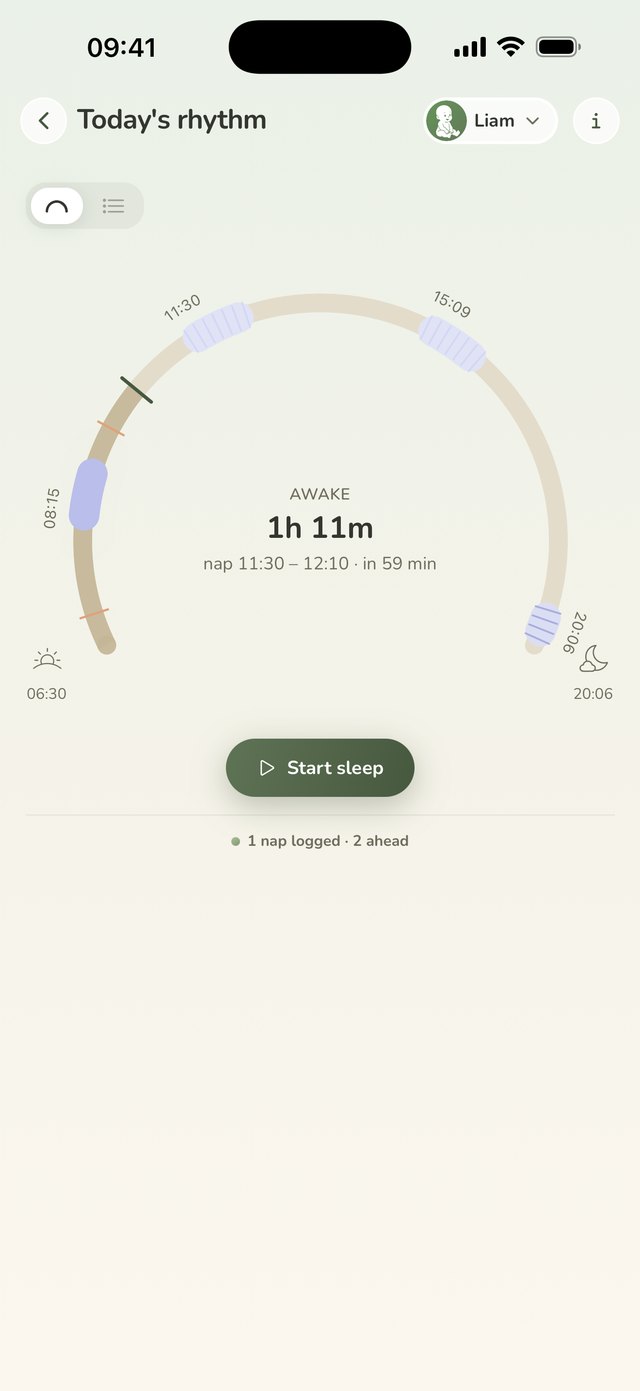
  • Awake-for, and time until the next window
  • Estimates that adapt to a short nap or a nap-light day
  • An optional nudge the moment the next sleep window opens
  • Descriptive, never bossy, no "you should"
Today's rhythm screen showing logged naps and predicted nap and bedtime windows.

Timeline

Last week, at a glance.

Every day you have logged, as a chart you can read in a second, with the day's own summary underneath it. This is the part that answers "is this new, or has it been happening all week?"
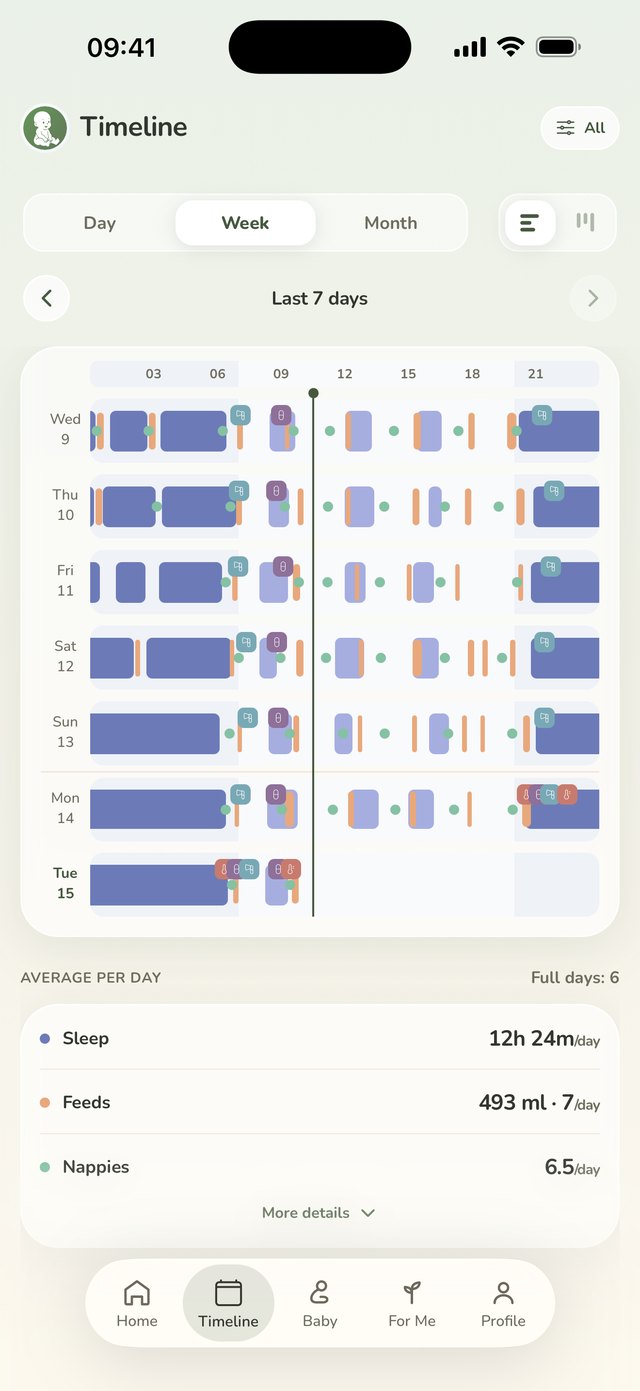
  • Day, week or month, with bars as rows or as columns, whichever way you think
  • The night span and its total, naps, and how much of the day was awake
  • Night wakings, with how long each one kept you up
  • Feeds with the average gap between them, and bottle volume split day against night
The timeline screen: a week chart of sleeps and feeds, with the average day underneath it listing sleep, feeds and nappies.

Growth

A curve you can actually read.

Add a weight and see where it lands on the official WHO curve for their age and sex, with the percentile written out as a sentence instead of left as a number to interpret. Kilos or pounds, centimetres or inches.

  • Weight and height, charted from birth to three years
  • WHO percentiles by the official LMS method, boys' and girls' curves
  • The 15th to 85th and 3rd to 97th bands drawn behind the line
  • An age axis that starts fitted to your child, not to a year of empty chart

The whole method, with worked numbers, is written out in what a growth percentile actually means.
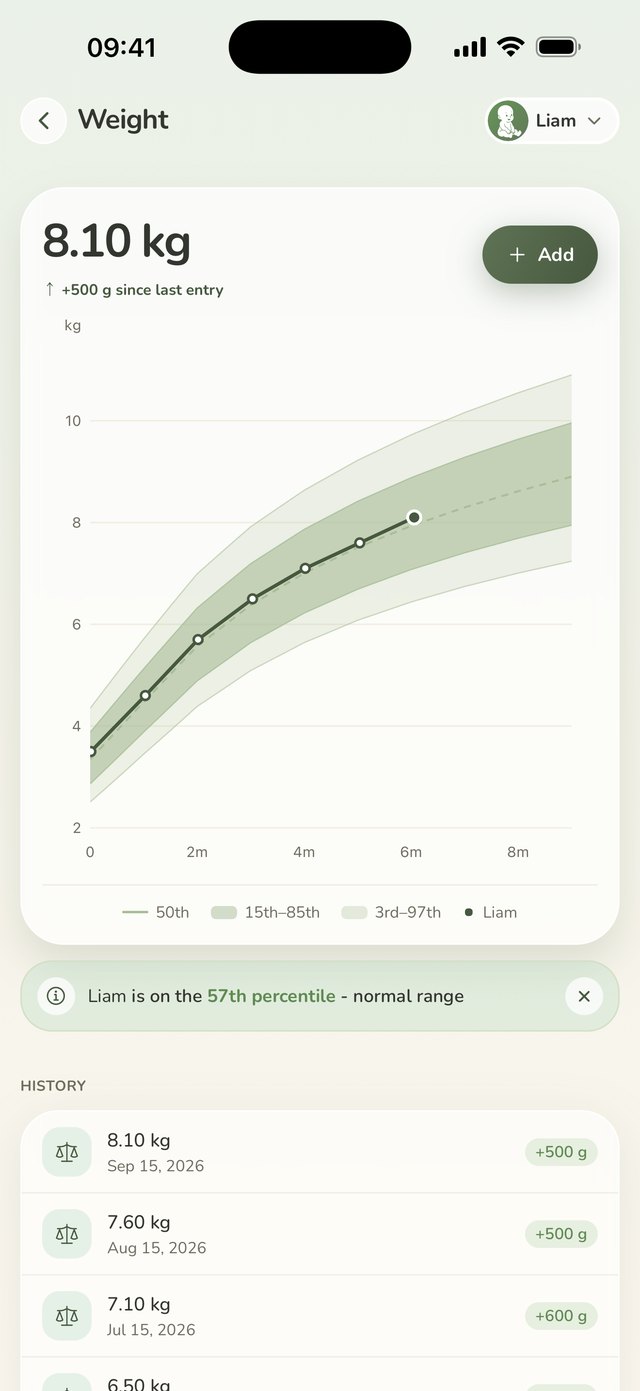
The weight screen: 8.10 kg on the WHO percentile bands, with the sentence 57th percentile, normal range, and entry history below.

Health

Records, not verdicts.

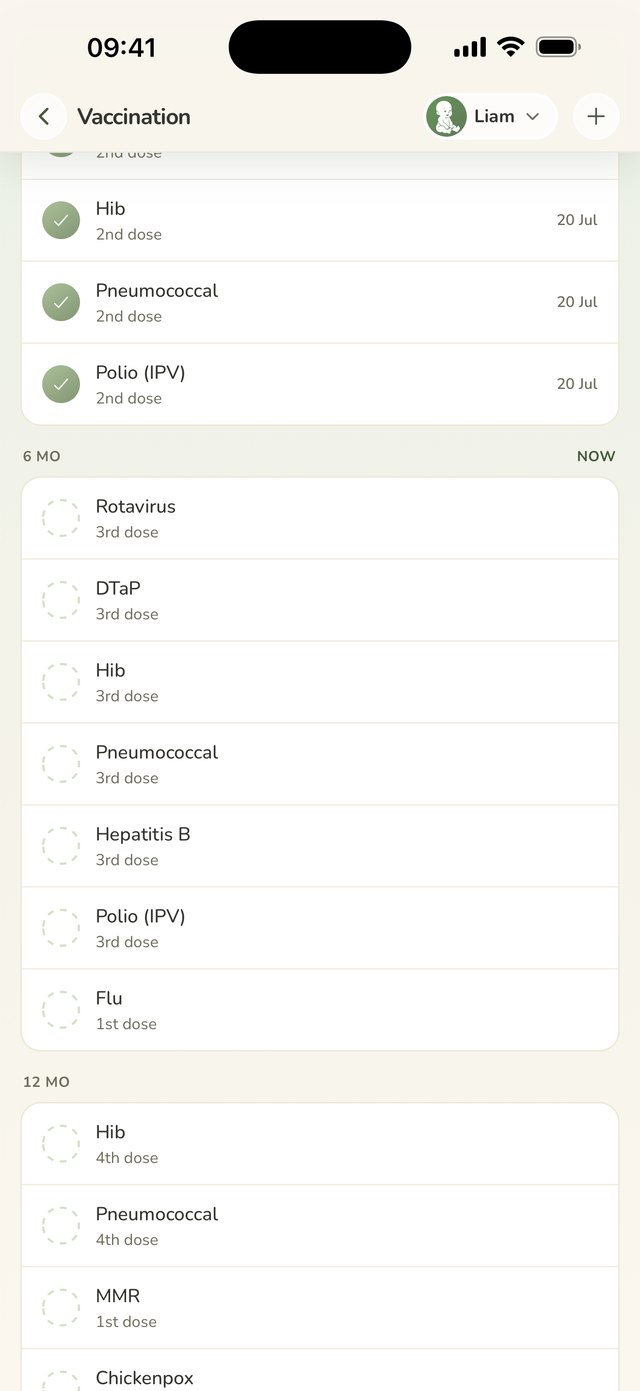
A temperature with how you took it, a medicine with its name, dose and time, and the official vaccination calendar for your country with your own record against it. All of it written down, none of it interpreted for you.
  • Temperature in Celsius or Fahrenheit, with where you took it: under the arm, mouth, ear, forehead or rectal
  • Medicine as a name and a dose in your own words, the name completing from the ones you have given before
  • No dose arithmetic of any kind: no mg/kg, no dose from weight, no next-dose time, no hint that another is due
  • Eight national vaccination schedules plus the WHO one, doses grouped by age, with a separate group for anything off calendar
  • No badges, no "overdue", no notifications about a shot
  • The highest temperature, the doses and the shots given all print in the PDF for the visit
The vaccination screen: doses grouped by age with the current group marked now, recorded rows carrying their date and the rest their calendar age.

Milk

What is actually in the freezer.

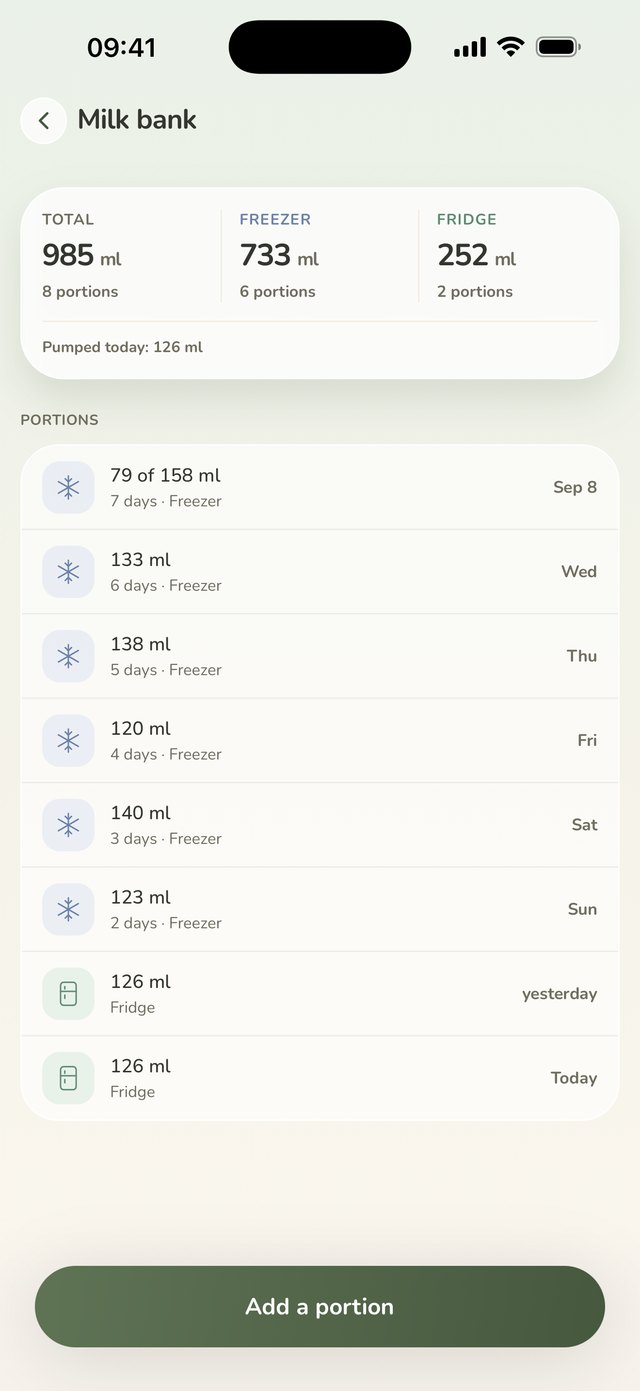
Log a pumping session with its volume and the sides you used, then say where the milk went: into the bank, or straight into the baby. The bank keeps the running total and every portion with its age, so a strip of masking tape stops being the record.
  • Volume and sides, with amounts offered from your own recent sessions
  • Portions in the fridge or the freezer, oldest first, each with how old it is
  • A bottle of breast milk can draw from the bank, oldest portion first
  • Edit or delete that feed and the milk goes back into the bank
  • Twins share one freezer: the stash spans every child on the account
  • No expiry date, no "safe until", no supply forecast. Storage advice differs by country and by appliance, and this app is not the place to settle it
The milk bank screen: 985 ml across eight portions, split between freezer and fridge, each portion listed with its age and the day it was pumped.

Baby

What to look for, this month.

The milestones that belong to the age they're at now, what is developing behind them, and play ideas that fit, so you're not reading a forum at midnight.
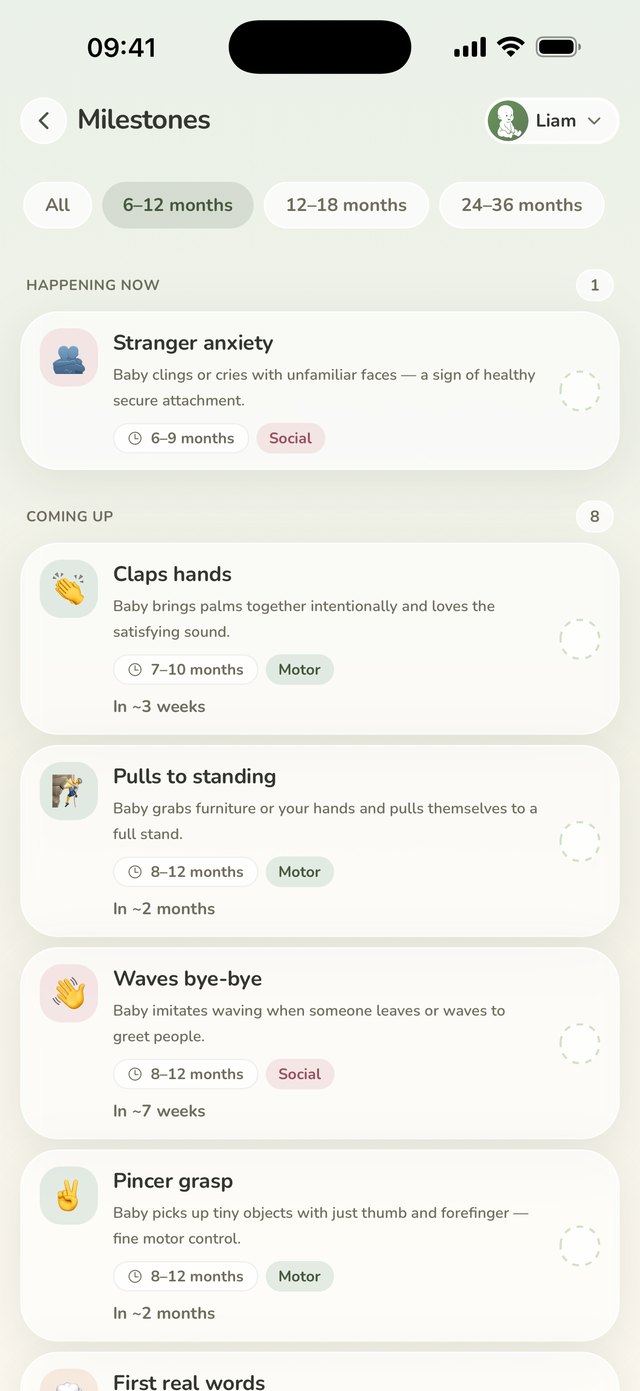
  • Happening now, coming up, and achieved, filtered by age band
  • An age timeline in twelve steps, from two weeks to two years
  • Every line in it traced to a primary publication, and the one line with no source is marked as a gap rather than quietly filled
  • Play ideas for the age they are at
The milestones screen: stranger anxiety happening now, then claps hands and pulls to standing coming up, each with its age band.

For me

One page that isn't about the baby.

A 30-second daily check-in on your energy, mood, body, sleep and sense of support, kept private to you, and breathing exercises for the moments that need one. Keep it up and a small garden fills in behind you.
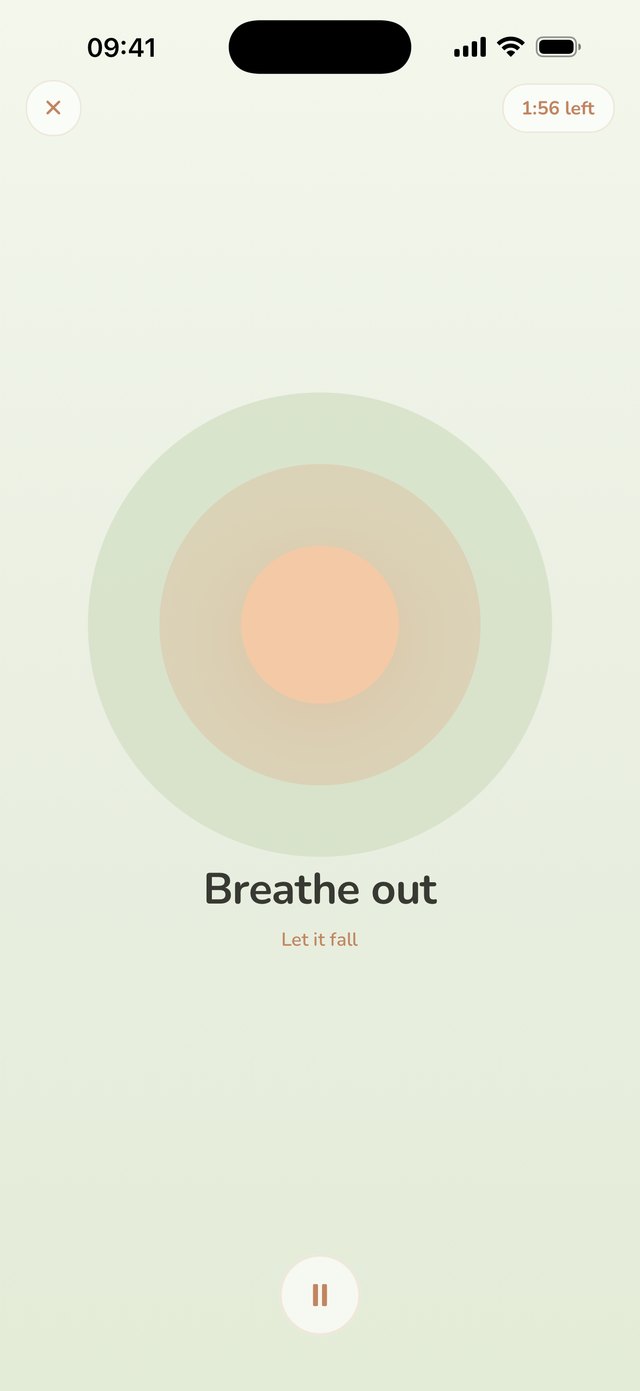
  • Check-ins with trends, unreadable by your co-parent
  • Three breathing patterns, with haptics
  • An optional reminder, at a time you pick, that skips a day you already did
The breathing exercise screen mid-session.

Also in the box

The parts you'll notice on week three.

Both parents, one timeline

Invite by email or link. Entries appear on the other phone as they're logged.

Apple Watch

Start and stop a feed or nap from your wrist, without finding the phone.

Home-screen widget

Today's state and the time since the last one, with tap-to-log on the widget itself.

Lock screen & Live Activity

A running session stays visible while it runs. No unlocking to check.

Up to three children

Siblings and twins on one account. Switch from the avatar in any header.

PDF or CSV

A tidy summary of recent feeding, sleep, growth, temperature and medicine for the visit, or the raw rows as a spreadsheet.

Light, dark, and warm

Three palettes, or follow the phone: warm by day, dark for the feeds that happen in the dark.

English, Українська, Español

Copy, dates and units follow the language you pick, not the phone's.

Nap window nudge

One notification when the next sleep window opens, off until you switch it on. It says what the card says, never what to do.

Set up per child

Which activities are worth logging, and which cards show, belong to the child. The three-year-old doesn't need a diaper button, and temperature only appears once you ask for it.

No silent queue

Offline, a new entry fails at once with a retry button instead of pretending to save. You always know what is actually recorded.

A nanny, not a parent

An invite can be for a nanny instead. They log feeds, sleep and diapers, and cannot touch weights, milestones or who else is in the family.

Your family's data

None of this is for sale.

No trackers, at all

No third-party analytics SDK, no advertising identifier, no App Tracking Transparency prompt, no ad network. There is nothing to opt out of because nothing is there.

Care data stays care data

What is recorded about usage is which app version, language and timezone an account runs. Never a weight, a feeding time, a note, or a child's name.

Private inside the family too

Your own check-ins are readable only by you: a co-parent who shares the child cannot see them. Every row is locked to your family in the database itself.

Take the data with you as a PDF or a CSV, and delete the account and everything in it from inside the app. The whole privacy policy is two screens long and in plain English.

Start with the next nap.

Free during early access, with no ads and no in-app purchases.

Still deciding? The questions people actually ask, or how it compares.

Fazier badge